

Description
Features and Benefits
- Orthogonal Frequency Division Multiple Access (OFDMA)
802.11ax uses OFDMA to allow multiple users to transmit data simultaneously. OFDMA splits a channel into sub-channels, known as resource units (RUs), with specific subcarriers, and assigns RUs to different users for
simultaneous transmission. OFDMA enables simultaneous multi-user transmission and reduces latency
caused by channel contention. - DL/UL MU-MIMO
DL/UL MU-MIMO technology allows AP to send data to multiple stations simultaneously, breaking through
the traditional wireless serial communication mechanism, increasing the utilization rate of wireless spectrum
resources, and improving the number of effective access users and access experience under high-density
deployment. - BSS Coloring
Spatial reuse allows the access points and their clients to differentiate between BSSs, assigns a different color
per BSS to help access point identify co-channel interference and stop transmission in time. This optimizes
frequency reuse and improves network capacity. - Target Wake Time (TWT)
TWT improves power efficiency and reduces contention by increasing client sleep time and allowing
negotiation of the times that clients can access the medium. - Innovative AI-Native Capabilities
The access point can realize AI-based radio frequency (RF) management, the connection of the terminal to
the network, service assurance, and healing of the network through the convergence of cloud, networking
and edge and H3C’s iRadio, iStation, iHeal, and iEdge technologies. - Security Policy
- Wireless security guarantee
The APs support WPA2-Personal, WPA2-Enterprise, WPA3-Personal, WPA3-Enterprise authentication and
encryption modes to ensure security of the wireless network. - Rogue Device Monitoring
APs support WIPS, and can monitor, identify, defend, counter, and perform refined management on the
rogue devices, to provide security guarantees for air interface environment and wireless data transmission. - Link Protection
The CAPWAP link protection and DTLS encryption provide security assurance, improving data transmission
security between the AP and the AC.
Hardware specifications
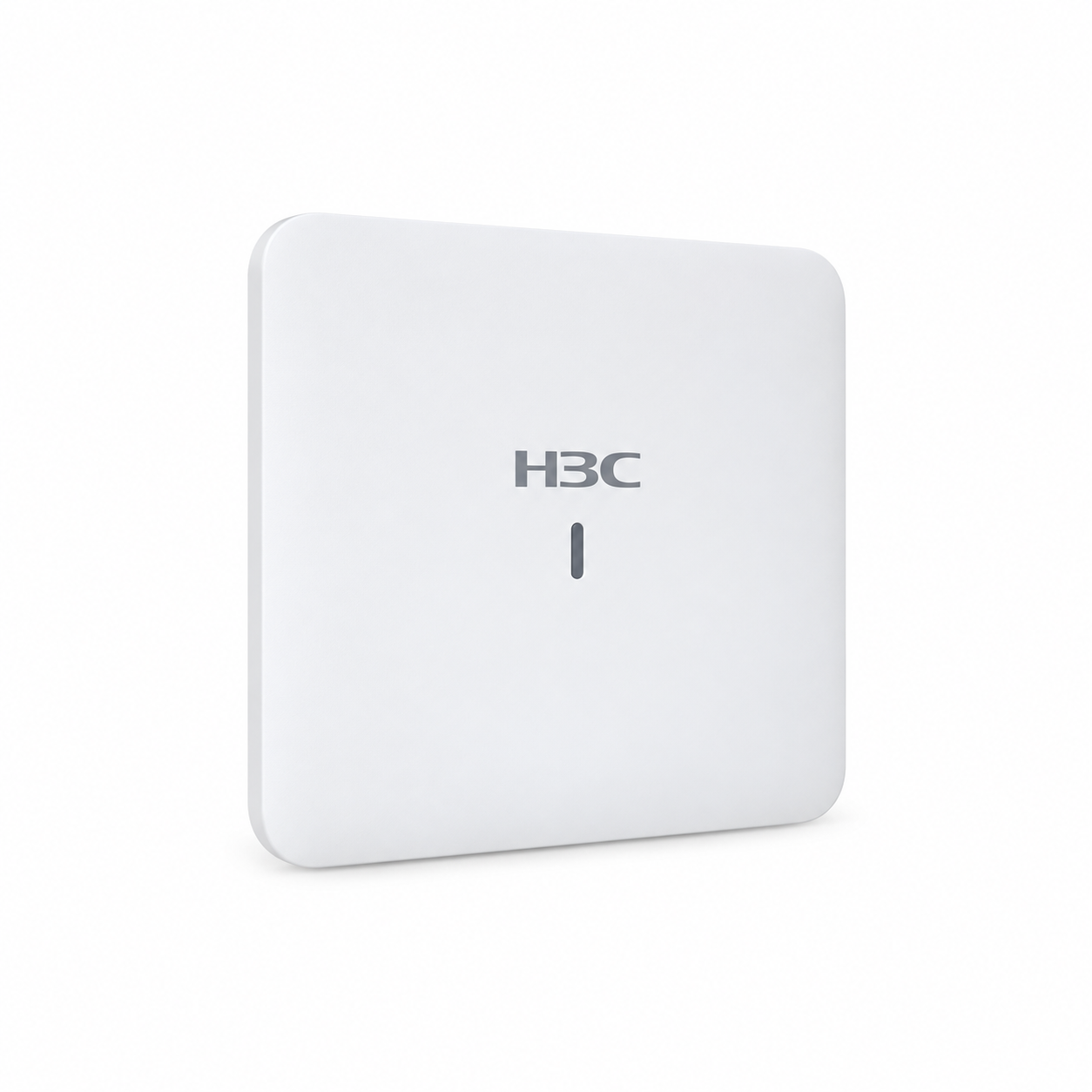
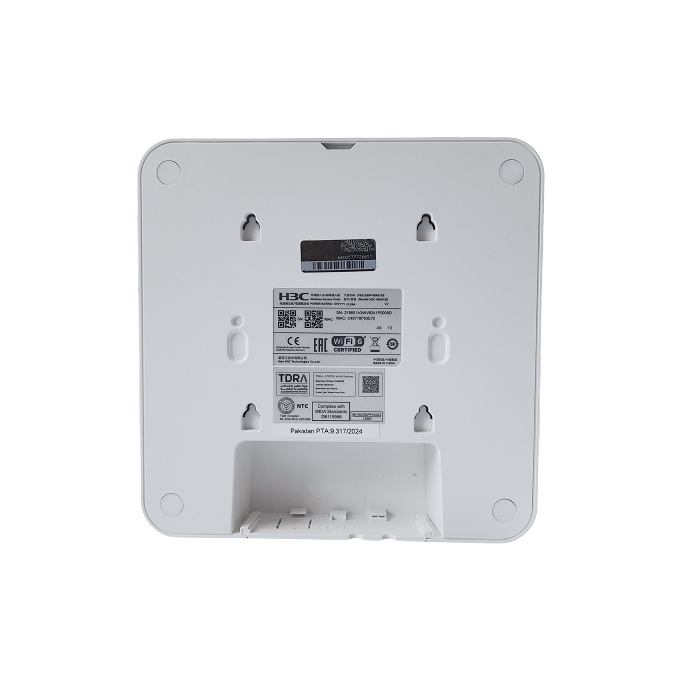
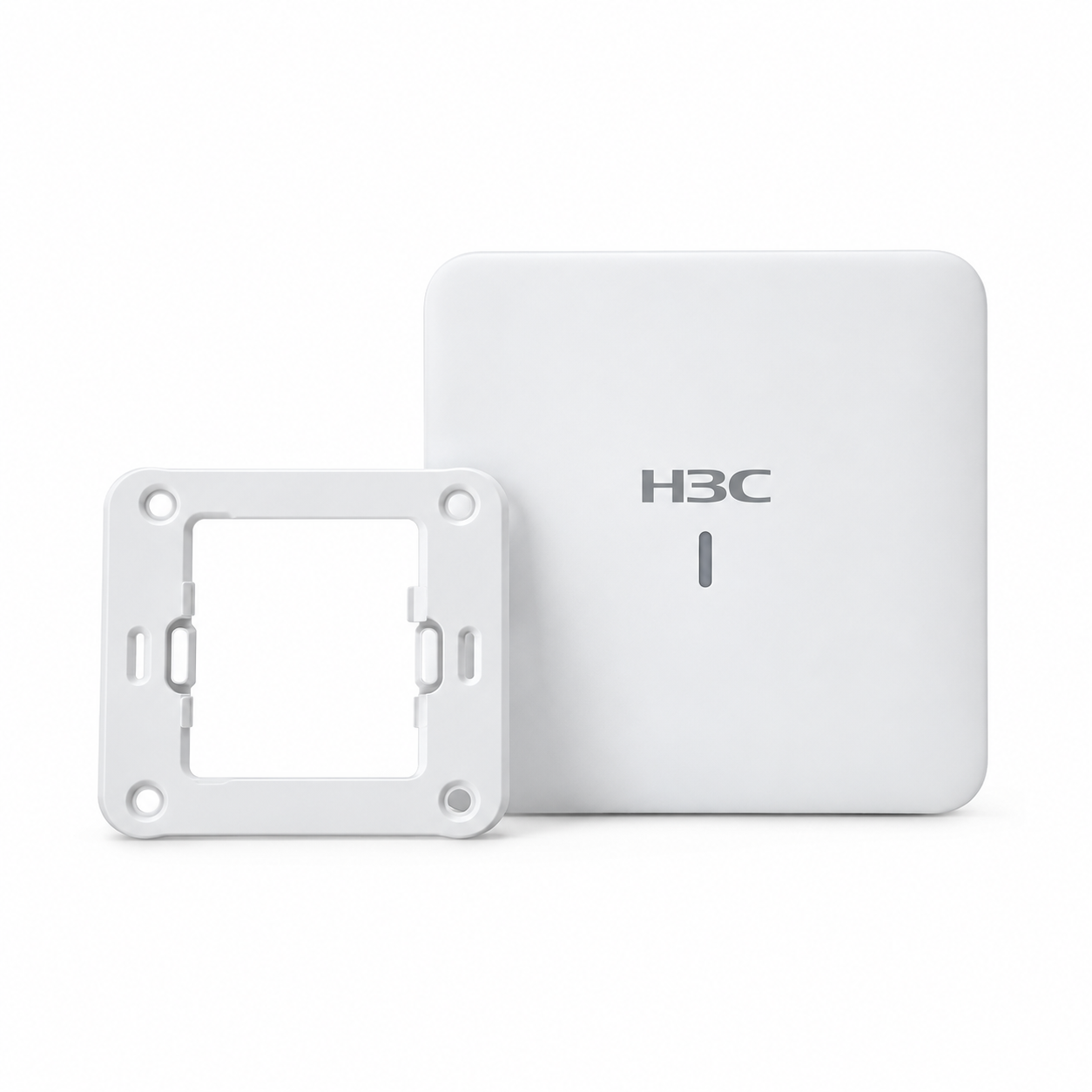
- Name
WA6120 - Weight
0.5Kg - Dimensions (W × D × H)
180mm X 180mm X 32mm - Interface
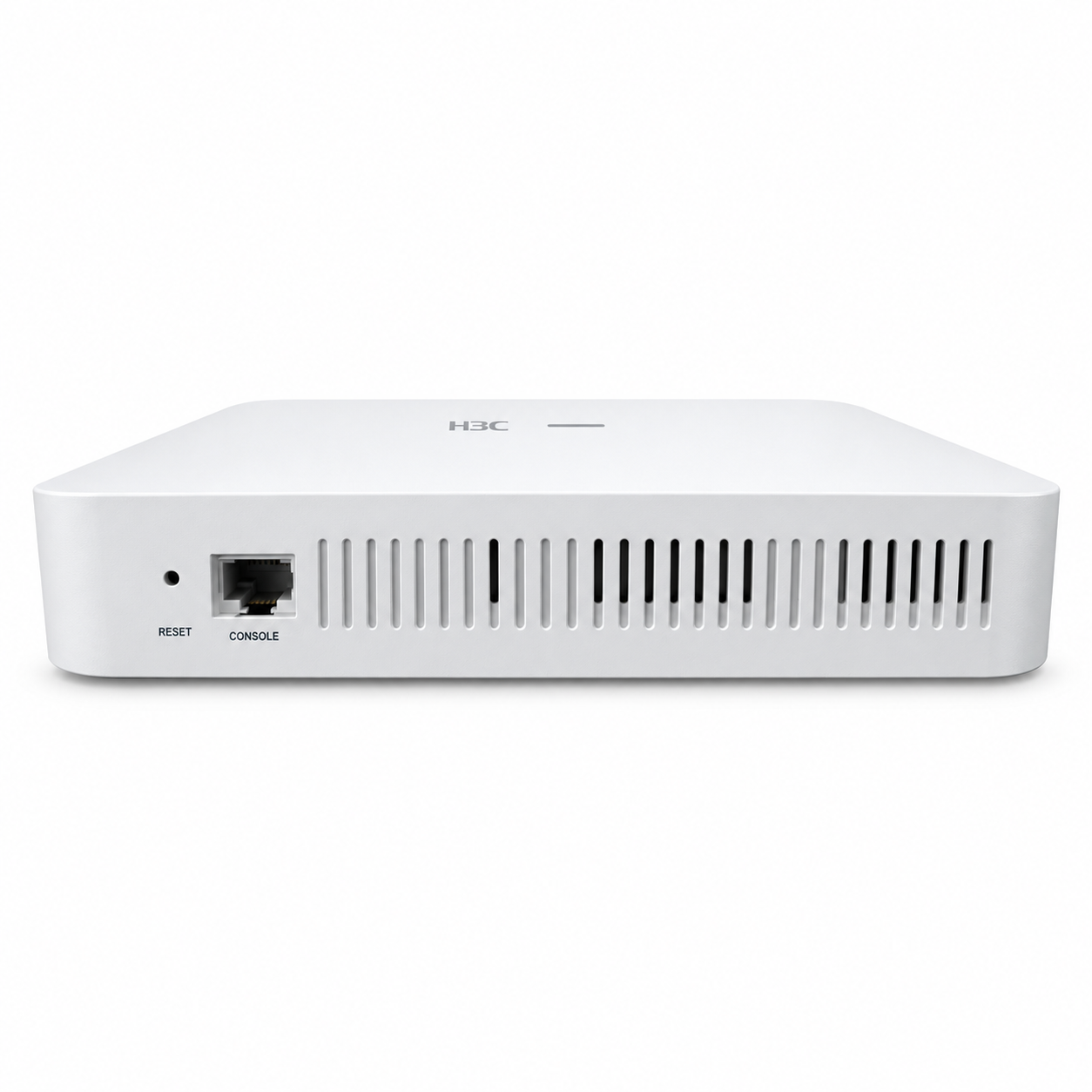
1 x 100/1000M Ethernet, RJ-45, PoE input - Console port
1 × Management console port (RJ-45) - PoE input
802.3af - Local power supply
54V DC - Antenna Type
Built-in omni-directional antenna - Antenna Gain
5GHz peak gain: 5dBi
2.4GHz peak gain: 4dBi
Note: The equivalent antenna gain is 4dBi in 5GHz and 3dBi in 2.4GHz - Frequency bands
2.400 to 2.4835GHz ISM
5.150 to 5.250GHz U-NII-1
5.250 to 5.350GHz U-NII-2A
5.470 to 5.725GHz U-NII-2C
5.725 to 5.850GHz U-NII-3/ISM - Modulation technology
OFDM: BPSK@6/9Mbps, QPSK@12/18Mbps, 16-QAM@24Mbps, 64
QAM@48/54Mbps
DSSS: DBPSK@1Mbps, DQPSK@2Mbps, CCK@5.5/11Mbps - Part Number
EWP-WA6120

Reviews
There are no reviews yet.